
RTA Kitchen Cabinets: What to Look For, What to Avoid, and How to Choose
Posted by Home Outlet Staff on 15th Sep 2026
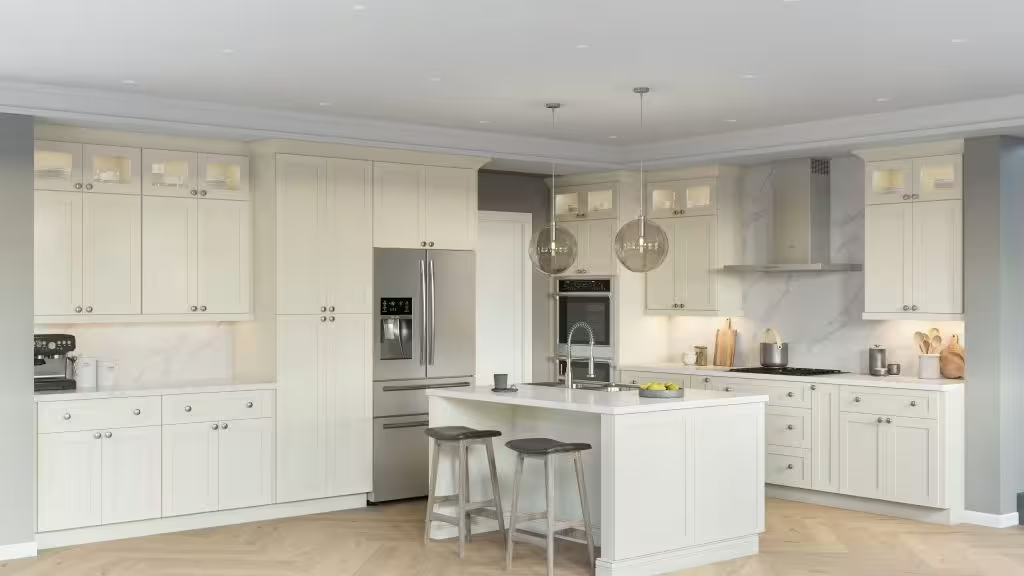 RTA Kitchen Cabinets: What to Look For, What to Avoid, and How to Choose
Planning a kitchen remodel gives you a lot of choices, and cabinet shopping is where many homeowners hit a wall. The options are plentiful, the terminology can be confusing, and price tags don't always tell the whole story. RTA kitchen cabinets are a popular option for DIYers and remodelers who want more control over both the process and the budget. But not all RTA cabinets are built the same, and choosing the wrong ones can cost you more in the long run.
This guide breaks down everything you need to know: what RTA cabinets are, how to evaluate quality, which features matter most, and the mistakes to avoid before you buy.
What Are RTA Cabinets?
RTA stands for ready to assemble. These cabinets are manufactured and shipped flat-packed, then assembled by the homeowner (or a professional) before installation. Think of them like high-quality furniture. The parts arrive organized and labeled, and you put them together using the included hardware.
Because they ship disassembled, RTA cabinets take up less space in transit. Their compact packaging can make shipping, pickup, storage, and transport easier than with fully assembled cabinets. The number and size of boxes will vary by kitchen layout, cabinet sizes, and the specific product line.
Already wondering how RTA compares to fully assembled options? We've broken that down in detail in our RTA vs. Assembled Kitchen Cabinets guide. And if you're still deciding between cabinet tiers overall, our Good, Better, Best cabinet comparison is a helpful place to start.
What Makes a High-Quality RTA Cabinet?
This is where most buyers go wrong. Price gets the attention, but construction quality determines how the cabinet actually performs over years of daily use. Here are the factors that matter most.
Cabinet Construction: Plywood vs. Particleboard
The cabinet box, the structural shell that holds everything together, can be built from different materials. The two most common are plywood and particleboard
- Plywood is made from layered wood veneers, which give it superior strength and dimensional stability. It holds screws better, resists warping, and performs significantly better in humid environments like kitchens. Plywood construction is the standard for durable cabinets.
- Particleboard is less expensive to produce but more susceptible to moisture damage. When exposed to water or steam over time, particleboard can swell, weaken, and eventually break down — a real concern near sinks, dishwashers, and anywhere humidity is a factor.
Home Outlet's RTA cabinet programs are built with plywood, not particleboard. That's not a minor detail. Plywood cabinets meet higher performance standards and hold up better in real kitchen conditions.
Soft-Close Hardware
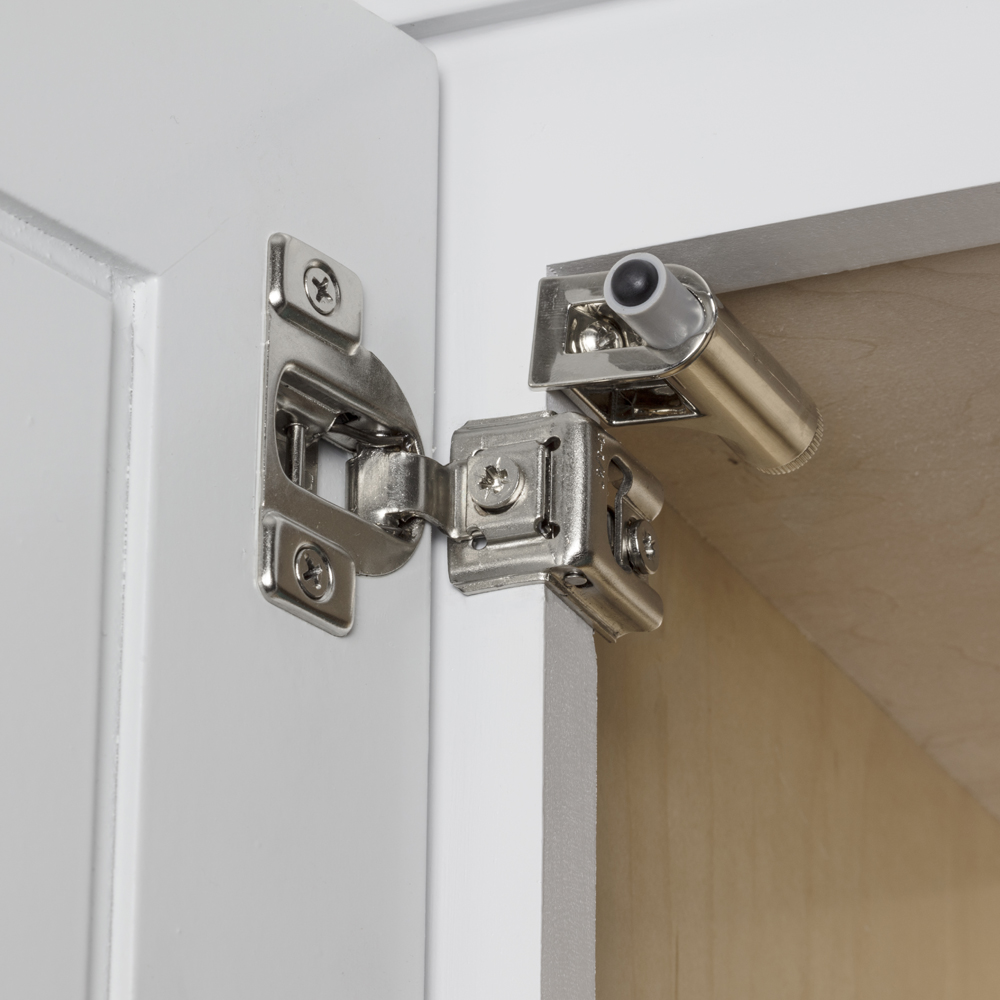
Soft-close hinges and drawer glides are one of the most noticeable quality upgrades in a cabinet. Instead of slamming shut, soft-close hardware uses a hydraulic mechanism to slow the door or drawer in the last inch of travel, closing gently and quietly.
Beyond the noise reduction, soft-close hardware reduces wear on the cabinet frame over time. It's a feature that becomes very obvious the moment you use a kitchen that doesn't have it.
Most Home Outlet in-stock RTA programs include soft-close hinges on doors and soft-close glides on drawers as standard, not an add-on.
Overlay Types: Full, Standard, and Partial
Overlay refers to how much of the cabinet face frame the door covers when closed. This affects both the appearance of the kitchen and, in some cases, access to storage.
- Full Overlay: The door covers nearly the entire face frame, leaving very little of the frame visible between doors. This creates a clean, contemporary look and maximizes the doors' visual presence. Most Home Outlet in-stock RTA programs feature full overlay.
- Partial Overlay (Standard): The door covers only part of the face frame, leaving a larger gap between doors. This is more traditional in appearance and often used in entry-level cabinet lines.
- Inset: The door sits flush inside the face frame opening. This is a premium style typically found in custom cabinetry.
When shopping for RTA cabinets, full overlay is generally the preferred choice for modern and transitional kitchen designs. It's also a signal that the manufacturer is targeting a higher quality tier.
Features That Add Long-Term Value
Once you've confirmed the core construction quality, a few additional features can make a difference in both function and longevity.
Finished End Panels
The exposed side of a cabinet run, such as where the cabinets meet a wall or island, is called the end panel. On lower-quality cabinet lines, this exposed side is left unfinished, requiring you to order and install a separate "skin panel" to make it look presentable.
Better cabinet programs include finished end panels as part of the standard box. This is a real value-add that saves both money and installation headaches. Before purchasing any RTA program, confirm whether end panels are included or need to be ordered separately. Most Home Outlet RTA programs include finished ends, which is worth factoring into your total cost comparison.
Assembly Systems: CAM Lock and Dovetail Joinery
The way a cabinet goes together determines how strong and square it will be once assembled. Two assembly methods are worth knowing:
- CAM lock assembly uses cylindrical connectors that lock panels together with a quarter-turn mechanism. It's fast, intuitive, and doesn't require glue or specialized tools.
- Dovetail joinery uses interlocking joints, typically found on drawer boxes, that fit together without fasteners. It's a sign of stronger construction and a more precise fit.
Home Outlet RTA cabinets are designed with CAM lock and dovetail assembly systems, making them accessible for homeowners new to cabinet installation without sacrificing structural integrity.
Moisture Resistance
Kitchens are high-humidity environments. Water spills, steam from cooking, and proximity to the dishwasher all put cabinets under regular moisture stress. As covered earlier, plywood construction is the foundation of moisture resistance. But the finish and edge banding on the cabinet box also play a role.
Look for tight, well-sealed edge banding on all interior and exterior surfaces. Loose or peeling edge banding is an entry point for moisture and an early sign of quality problems.
Common Mistakes to Avoid When Buying RTA Cabinets
Before you place an order, watch out for these common missteps:
- Shopping based on price alone: A lower price sometimes reflects lower-quality materials or construction. Compare what you're actually getting for the cost.
- Assuming all RTA cabinets use the same materials. Construction varies widely between brands and programs. Ask specifically about box materials.
- Ignoring overlay style: Full-overlay and partial-overlay doors produce noticeably different looks. Make sure the style you choose matches your vision.
- Overlooking hardware quality: Soft-close hinges and drawer glides affect everyday experience. Don't treat hardware as an afterthought.
- Failing to confirm whether finished end panels are included: This can affect your final budget and installation plan.
- Not reviewing the assembly system before purchase: Some systems are more DIY-friendly than others. Understand what you're signing up for.
- Forgetting to measure the kitchen carefully: Cabinet orders are specific. Measurement errors can delay your project and add cost.
- Choosing cabinets without considering moisture and everyday use: Materials that work in a bedroom or laundry room may not be the best fit for a high-use kitchen.
Are RTA Cabinets Right for Your Project?
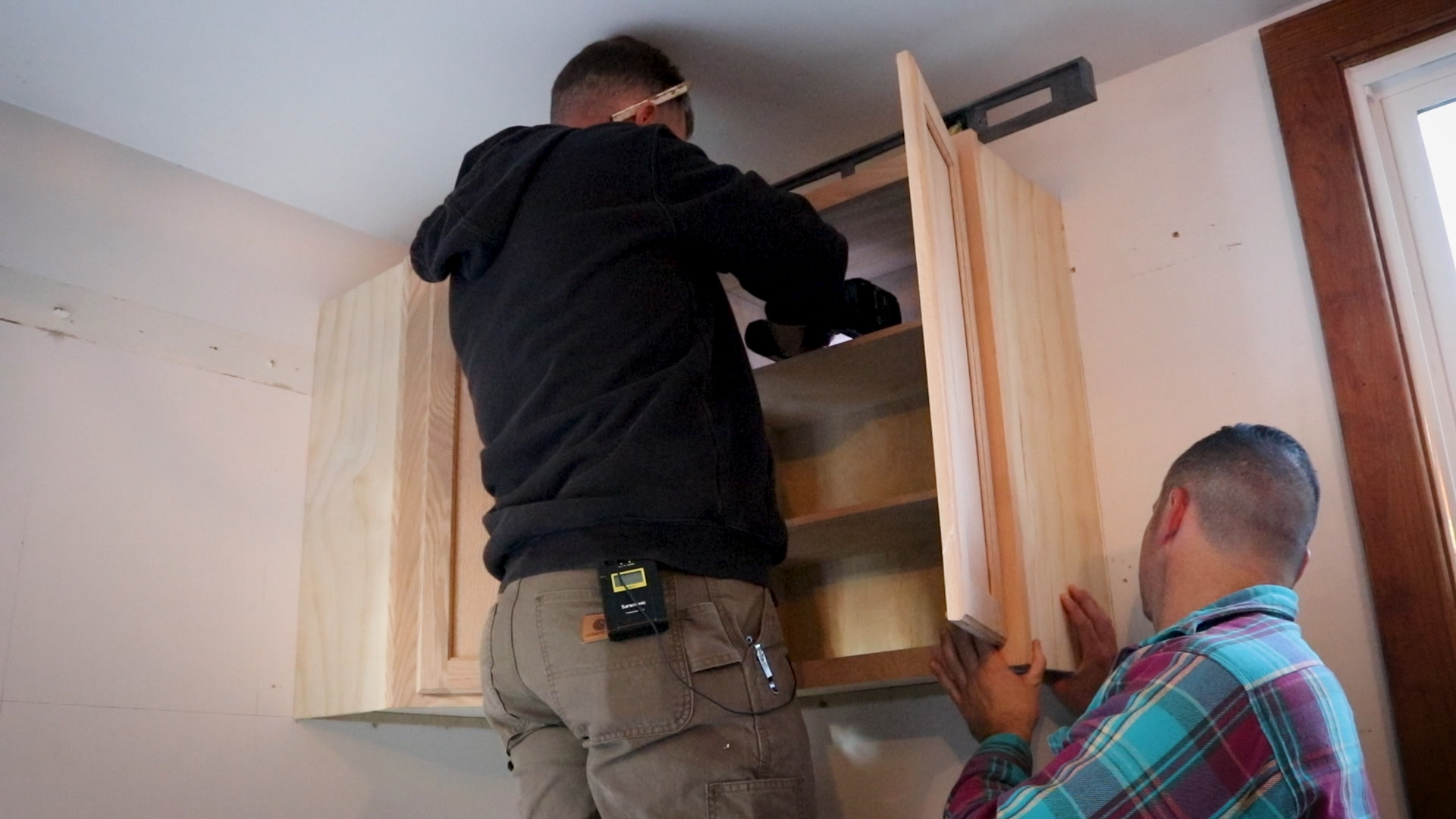
RTA cabinets are a strong fit for a wide range of kitchen projects, but they're particularly well-suited to certain situations.
Choose RTA cabinets if:
- You're working within a defined budget and need to maximize quality per dollar
- You're a confident DIYer or have someone reliable to handle assembly
- You want in-stock availability without long lead times
- Your kitchen layout uses standard cabinet sizes
- You're remodeling a rental property, investment home, or first home
Consider pre-assembled or semi-custom options if:
- Your timeline is very tight, and you need cabinets ready to install immediately
- You have highly non-standard dimensions that require custom sizing
- You're investing in a forever home and want maximum design flexibility
For homeowners remodeling on a realistic budget, quality RTA cabinets (especially those with plywood construction, full-overlay doors, and soft-close hardware) can offer excellent value. They're also a smart investment. If you're weighing the financial case, our post on whether RTA cabinets are a smart investment covers the numbers in more detail.
Ready to explore your options? Shop Home Outlet's selection of Ready-to-Assemble kitchen cabinets and find the right style for your remodel.
Frequently Asked Questions
What are RTA kitchen cabinets?
RTA kitchen cabinets are factory-built cabinets that ship flat-packed and are assembled before installation. Because they ship disassembled, they can cost less to transport, but quality varies by manufacturer, so materials and construction matter.
Are RTA cabinets durable?
Yes, when they’re made with quality materials. RTA cabinets with plywood boxes, dovetail drawer joinery, soft-close hardware, and tight edge banding can perform comparably to similarly constructed pre-assembled cabinets, while particle board is generally more vulnerable to moisture and wear.
Are plywood cabinets better than particle board cabinets?
For kitchens, plywood generally offers better strength, fastener retention, and moisture resistance than particle board. Particleboard can work in dry, low-traffic areas, but plywood is typically a stronger choice for the heat, steam, and humidity found in kitchens.
What is the difference between full overlay and partial overlay cabinets?
Full-overlay doors cover nearly the entire cabinet face frame, creating a cleaner, more contemporary look, while partial-overlay doors leave more of the frame visible for a more traditional appearance.
Are RTA cabinets difficult to assemble?
Not necessarily, especially with a DIY-friendly system such as the CAM Lock assembly. With basic tools and clear instructions, assembly can be straightforward, and many Home Outlet locations also offer in-store assembly services.
